
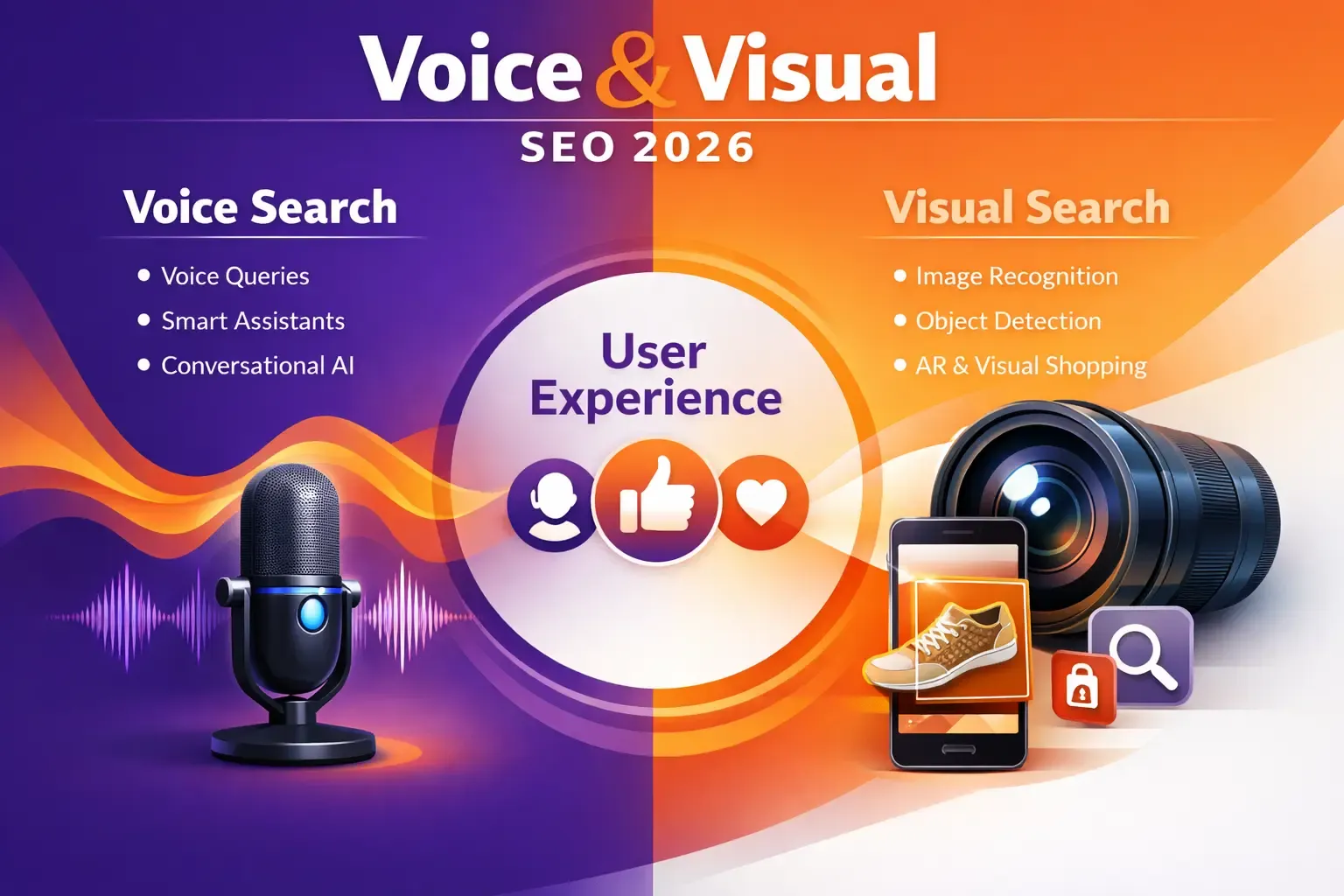
Voice & Visual SEO: Preparing for the Spoken and Seen Search
Have you ever noticed that you talk to your phone more than you read a book? Or that sometimes you search using an image instead of text? This isn’t a coincidence—it’s the future of search. In this article, I’ll share my hands-on experience optimizing content for voice and visual search and how it can become a core part of your modern SEO strategy.
Why Voice SEO is a Must Today
A few years ago, users would type “best restaurants in Cairo.” Today, they might say aloud: “Hey Google, show me the best open restaurants in Cairo now.” The difference isn’t just words—it’s intent and phrasing. Voice search relies on natural language, longer queries, and precise intent. From my experience, sites not optimized for voice often miss huge opportunities for new users.
Practical Example:
I worked with a travel website. After rewriting articles in a more conversational style, adding FAQs, and providing concise answers, we saw a noticeable increase in voice search visibility on Google Assistant and Alexa within two months. The key takeaway? Make your content speak, not just be read.
Visual SEO: Image & Video Search
Did you know Google can now recognize image and video content with advanced accuracy? Optimizing visuals isn’t optional anymore—it’s essential. High-quality images with accurate alt text, well-structured videos with captions, and clear infographics all improve visibility in visual search.
Personal Experience:
One client had a product site with images only—no alt text, no metadata. After adding detailed alt descriptions and structured data, we saw a 30% increase in image search impressions and a significant boost in conversions. Lesson learned? Never underestimate the power of visuals.
Practical Steps to Improve Voice & Visual SEO
Here are actionable steps you can start implementing today:
1. Use Conversational Content
Write in a question-and-answer format, use everyday language, and keep responses short. Voice search favors easily interpreted content.
2. Optimize Visual Elements
Add accurate alt text to images, use structured data for videos, and ensure files are compressed and load quickly.
Want to Improve Your Website Performance?
Get a free comprehensive analysis of your site speed and SEO performance in seconds
3. Focus on User Experience
Site speed, navigation ease, and the quality of visual content all affect voice and visual rankings. From my experience, slow websites lose opportunities fast.
4. Target Long-Tail Queries
Voice users ask full questions, so create content that answers specific, realistic questions. For example, instead of “Italian restaurants,” use “Best Italian restaurants open after 10 PM in Cairo.”
5. Use Advanced Image & Video Techniques
AI-based image recognition tools can analyze your content and present it to visually searching users. Adding captions, alt text, and structured data improves visibility.
Additional Tips from My Experience
- Regularly review your site’s performance for voice and visual search.
- Test real user questions and make sure your content answers them accurately.
- Invest in high-quality visual content—don’t rely solely on text.
- Remember: even small optimizations can make a huge difference in search results.
Final Thoughts
Voice and visual SEO aren’t a distant future—they’re happening right now. Sites that prepare today will lead tomorrow. Start making your content speak and be seen, and you’ll see measurable improvements in engagement, traffic, and rankings. Are you ready to future-proof your site?
This article explains voice and visual SEO, showing how to optimize content for voice and image search with practical steps and real examples.



No comments yet. Be the first to comment!